
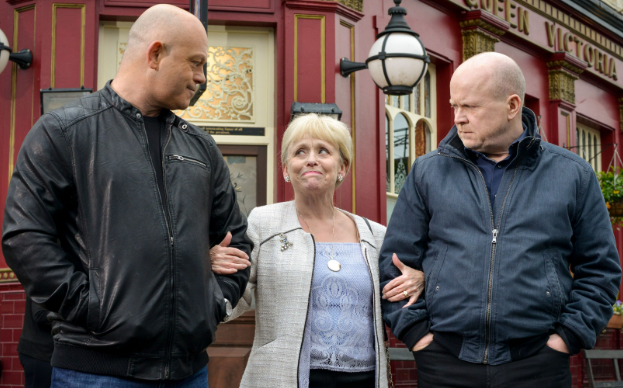
Do People Even Watch Older Years Of EastEnders? eastenders
The hyper-glossy, high-stakes industrial landscape of modern Walford has officially been plunged into an era-defining phase of absolute, terminal volatility, as the latest broadcasting blocks of BBC’s EastEnders attempt to resurrect the ghost of a twenty-year-old criminal conspiracy while violently colliding with the distinct generational apathy of a modern viewing audience. For millions of dedicated households across the United Kingdom tuning in during mid-May 2026, the sudden re-emergence of Zoe Slater—a character whose foundational narrative weight was definitively forged back in the historic, blood-soaked 2005 cellar orbit of Dirty Den Watts—has triggered a severe architectural fracture between long-term legacy viewers and a totally alienated contemporary demographic. While dedicated, hyper-fixated purists have spent years tracking every frame of the iconic Slater dynasty through archival footage, a staggering majority of the current network subscribers possess zero firsthand experience with her complex, multi-generational trauma. Unfortunately, the contemporary production team has executed a spectacular, short-sighted creative blunder by failing to ground her current high-octane stalking crisis in clear, accessible history, choosing instead to arbitrarily pick and choose which pieces of the past matter while completely neglecting the vital, primitive necessity of endearing an ancient character to a completely fresh audience. By treating a legendary soap opera matriarch as an aggressive, drop-in plot device rather than a deeply humanized survivor, the showrunners have accidentally formatted Zoe as one of the most obnoxious, alienating pieces on the current board, forcing frustrated modern viewers to aggressively disconnect the exact moment she steps into a scene to scream more repetitive, seemingly irrational declarations into the open air of Albert Square.
This profound atmospheric decay moves in terrifying synchronization with a brutal campaign of unredacted psychological attrition on screen, where Zoe’s severe, panic-driven outbursts are actively pushed onto the absolute precipice of a permanent narrative demolition. Drowning in an inescapable prison of chilling, anonymous digital threats, the hyperventilating Slater daughter has spent recent weeks projecting an immense reservoir of sleep-deprived anxiety onto her new friend, Lauren Branning, completely blind to the reality that her frantic defensive maneuvers look entirely unhinged to a viewer who doesn’t understand the underlying scars of her past. Because the current writing team lazily relies on shorthand nostalgia rather than active character development, the audience is left entirely isolated from her internal pressure cooker, watching her manic paranoia operate in a pitch-black vacuum where her historic terror of legal execution feels forced and hollow. When a hyper-alert Kat Slater violently liquidates her daughter’s baseline security by aggressively evicting her from the Queen Victoria pub following a wild-eyed public meltdown, a cornered Zoe is forced to seek solace in the shadow-drenched orbit of her toxic ex, Dr. Anthony Truman, initializing a toxic new minefield of domestic friction that merely amplifies her image as a highly repetitive, frustratingly static character who cannot stop hitting her own emotional self-destruct button.
The layout of this television warfare takes an exponentially more visceral turn as the showrunners deploy the highly publicized, short-term comeback of the fiery Sam Mitchell to serve as the ultimate, high-heeled catalyst for Zoe’s ongoing digital torment. Long-time enthusiasts will immediately unpeel the radioactive, uncoupling history binding these two women to the fatal hammer blow dealt by Chrissie Watts, a spectacular 2005 infraction that saw Sam wrongfully framed and blackmailed before Phil and Grant Mitchell deployed their traditional street muscle to clear her name. Yet, by displaying a familiar silhouette watching from a distance in expensive high heels, the production team attempts to harvest an immediate chemical cascade of suspense from a historic feud that has effectively been frozen in ice for over two decades. Because the administrative script completely bypasses the structural work needed to re-establish the bone-deep malice and shared vulnerability between these two independent survivors, modern audiences are left to view the brewing gladiatorial arena with a sense of profound cynicism, treating Sam’s predatory stalking matrix and her impending, tragic Christmas breast cancer diagnosis as a collection of cheap, superficial ratings stunts engineered for shock value rather than a grounded masterclass in serial suspense.
The multi-tiered failure to bridge this generational divide went completely nuclear across active online fan forums, where a powerful wave of digital public outrage has fiercely condemned executive producer Ben Wadey’s handling of the Slater lineage’s legacy. Social media networks have become an intense battlefield of television criticism, with viewers openly arguing that the show’s stubborn reliance on unredacted, decades-old continuity behaves like an exclusive club that locks out the modern consumer, transforming what should be a triumphant character resurrection into a chore. The court of public opinion notes that making a character relevant to the year 2026 demands more than just dragging her back onto the wet cobblestones to cross-examine her past mistakes; it requires a sophisticated, forward-thinking baseline that treats her historic guilt as a living, breathing entity that the audience can actively feel. Instead, the current writing paradigm treats Zoe’s profound trauma as an unredacted legal footnote, leaving a highly talented Harriet Bibby-level performance from the cast to drown in a sea of manufactured, clunky exposition that completely flattens the rich, operatic potential of her historic collision course with the Mitchell empire.
Ultimately, as the suffocating twilight of mid-May 2026 establishes its permanent, unyielding grip over the BBC network schedules, the global EastEnders viewing community remains suspended over an absolute abyss of breathless frustration, watching a legendary icon slowly dissolve into a background nuisance. The breathtaking pacing of this real-time breakdown proves with a lifetime authority that you truly do not know what you have got until it is cleanly gone, unmasking the sobering reality that a soap opera cannot survive solely on the memories of its oldest fans. The global network audience is left to pace their living room floors on pure adrenaline and irritation, fully aware that when the truth behind Zoe’s anonymous tormentor finally breaches its banks and the final frames of this grittier winter block broadcast to the nation, the resulting chemical explosion will fail to hit the chest of a contemporary audience if they still do not care who she is. The stage is set for a historic autumn aftermath of cataclysmic proportions, leaving a fragmented fandom to frantically debate whether the production team will finally learn to endear their legacy titans to the modern world, or if the rich, cross-generational history of Albert Square will continue to be cleanly liquidated in the pursuit of lazy, short-term nostalgia.