
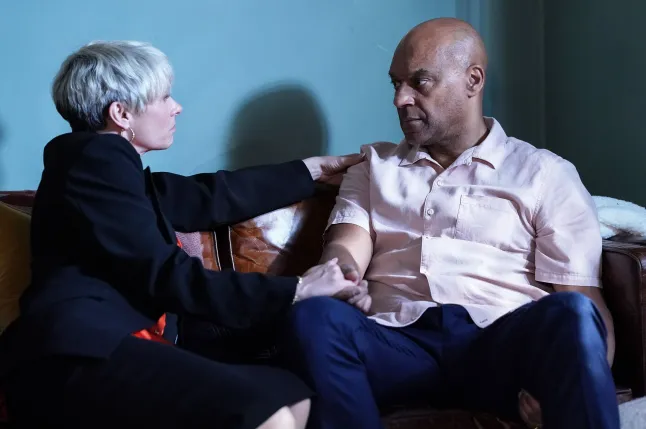
EastEnders – Nicola & George are told what happens next as Ivy is coming home
The fluorescent lights of the neonatal unit hum with a clinical indifference that stands in stark contrast to the thundering heartbeat of a family finally preparing to cross the threshold into a new, terrifying reality. After weeks of sterile corridors and the rhythmic beeping of life-support monitors, the moment has arrived to take a fragile new life home, yet the transition is far from the serene domestic homecoming one might imagine. The air is thick with the weight of a complex care plan, a roadmap of surveillance designed to safeguard a vulnerable infant whose journey has been anything but conventional. The medical team delivers the news with a practiced, gentle authority: this is not just a release, but a transition into a six-week period of intensive monitoring where the neonatal team will become a fixture in their living room, visiting twice a week before handing the baton to a health visitor for weekly check-ins. It is a level of scrutiny that feels “a bit much” to a parent who has already raised boys without the need for a spreadsheet, yet the gravity of the situation settles into the room like a cold Manchester fog, turning a joyful milestone into a high-stakes mission of survival where every ounce of milk and every soiled nappy becomes a data point in a desperate quest for stability.
The psychological toll of this clinical homecoming is visceral, as the parents grapple with a list of demands that feel more like a pilot’s pre-flight checklist than a nursery routine. In this household, the casual intuition of experienced parenting has been replaced by the rigid necessity of record-keeping, a manual of feeds and vitals that serves as a constant reminder of the fragility they are now responsible for protecting. The resistance is palpable—a father’s quiet realization that “I didn’t have to do that with my boys”—but it is quickly swallowed by an overwhelming, protective instinct that recognizes the unique needs of this daughter. This is a world where “a few notes here and there” are no longer optional; they are the front line of defense. The medical literature handed over is not just paper; it is a weight of expectation covering adjusted developmental milestones and the invisible threats of infection and air quality. The family is being asked to transform their home into a fortress, a sanctuary where the outside world is filtered through a lens of extreme caution, and where the simple act of breathing is monitored with the intensity of a countdown, highlighting the agonizing shift from the communal joy of a new baby to the isolated, high-pressure reality of specialized care.
Despite the mounting list of directives, there is a fierce, defiant resolve blooming in the heart of the father as he stares down the stack of literature and the looming presence of the health visitors. The dramatic stakes of this transition are anchored in the simple, profound truth that “she’s coming home with us,” a phrase that carries the weight of a sacred vow against any obstacle the medical world can throw their way. There is no room for hesitation or the luxury of feeling overwhelmed when a life hangs in the balance of a accurately recorded feed or a well-timed antiseptic wipe. The father’s demand for “the more advice you can throw at us, the better” is a battle cry of a man ready to trade his peace of mind for his daughter’s progress, acknowledging that while this level of surveillance is a burden, it is one he will carry with a grim, unwavering determination. This is a masterclass in the quiet heroism of the domestic sphere, where the battlefield is a changing mat and the victory is measured in milliliters and the steady rise and fall of a tiny chest in a quiet bedroom.
As the family prepares to exit the unit, the realization hits that their definition of a “milestone” has been permanently altered by the trauma of the neonatal experience. No longer are they looking toward the first step or the first word with the carefree anticipation of their previous children; instead, they are hyper-focused on the “adjusted” milestones, a constant reminder that their daughter is operating on a different timeline, one forged in the crucible of her early struggle. Every visitor who enters their home for the next six weeks will be a reminder of what they nearly lost, a weekly “check-in” that serves as both a lifeline and a tether to the hospital they are so desperate to leave behind. The air quality of their neighborhood and the health of every passing stranger are now potential villains in a narrative that demands constant vigilance, turning the mundane world into a minefield of biological threats. This is a story of a family navigating the “slate-colored” reality of a high-risk infancy, where the joy of homecoming is tempered by the profound, exhausting knowledge that the war for her health is only just entering its most critical phase. 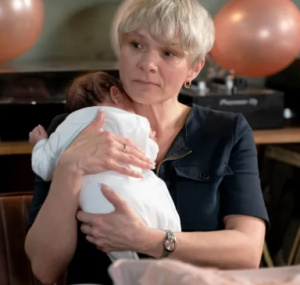
The final moments before the car door closes on the hospital car park are saturated with a dramatic tension that feels almost cinematic, as the family drives away from the safety of the nurses and toward the uncertainty of their own living room. They are a unit now, bound together by a spreadsheet and a shared, unspoken fear that is being masked by a veneer of “nothing we can’t handle.” The road ahead is paved with weekly phone calls and biometric logs, a six-week gauntlet that will test the very foundations of their marriage and their sanity. But as they pull away from the clinical hum of the neonatal unit, the focus remains squarely on the tiny passenger who represents a triumph over the odds. The secrets of the next month and a half are hidden in the pages of the medical literature they now clutch like a bible, but the message is clear: the cobblestones of their new life may be slick with uncertainty, but they will walk them with their heads held high and their notebooks at the ready. The storm of the hospital is over, but the vigil at home is just beginning, and in this household, every wet nappy and every ounce of formula is a testament to a love that refuses to be broken by a care plan.