
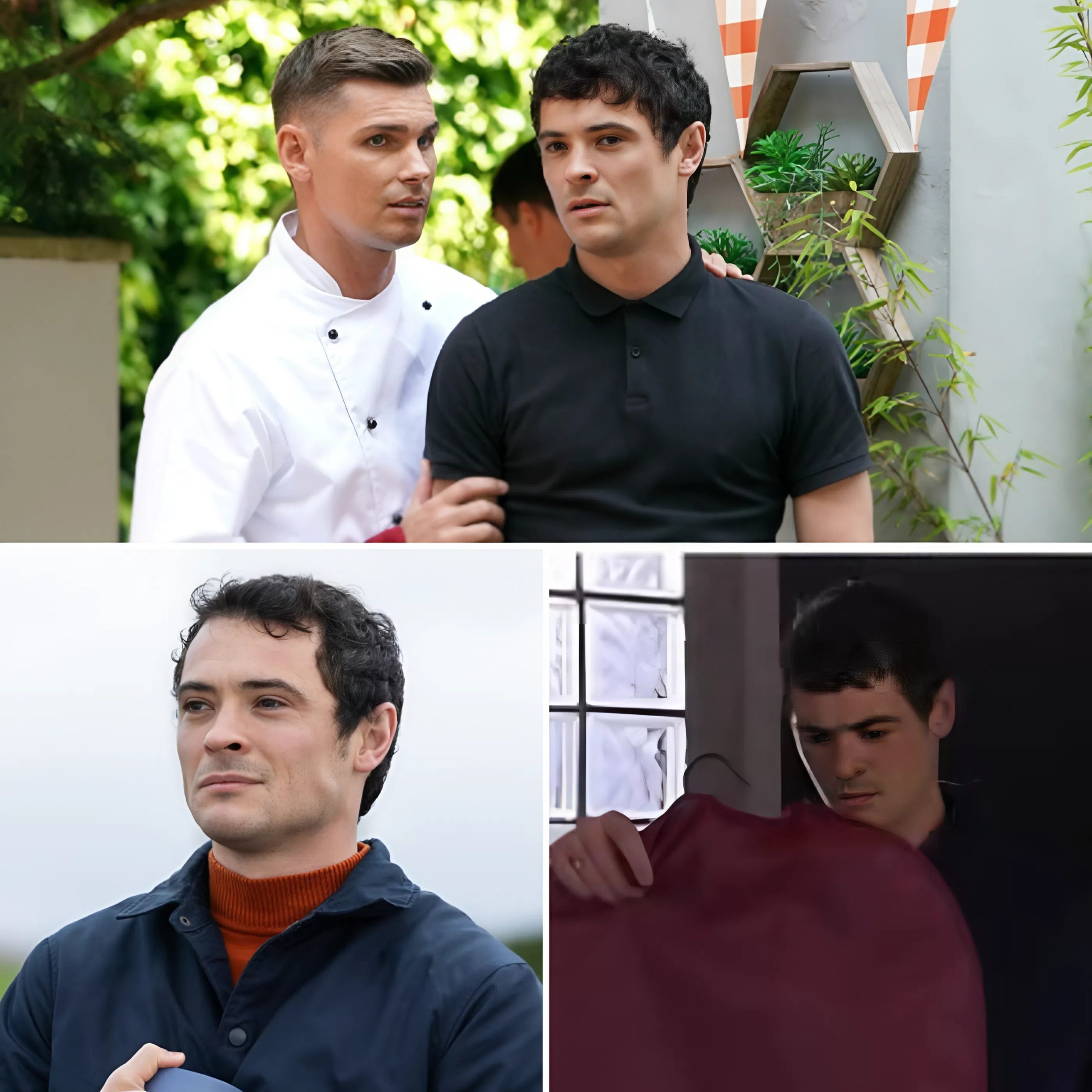
Hollyoaks- Ste gives Rex a dress for the wedding to show he accepts him for who he’s
The village of Hollyoaks has long been a theater of volatile secrets and fragile alliances, but on May 12th, 2026, the atmosphere shifted toward a moment of profound, quiet radicalism that resonated far beyond the confines of the wedding prep. Ste Hay, a man whose history is a harrowing tapestry of trauma, impulsive missteps, and a desperate search for redemption, took a step that surprised even his closest confidants by presenting Rex with a dress for the upcoming nuptials. This was not a mere gesture of hospitality or a casual nod to fashion; it was a defiant, deeply emotional declaration of acceptance, a symbolic act that sought to bridge the chasm of misunderstanding that has plagued their complex relationship for months. The gift itself—a stunning, deliberate choice that acknowledged Rex’s identity with grace and sincerity—served as a lightning rod for the simmering tensions of the wedding arc, forcing every observer to confront their own biases in the face of Ste’s unwavering commitment to showing Rex that he is, at last, fully seen and celebrated. For a character like Ste, who has spent so much of his life struggling to find his own place in the world, the act of creating a space for someone else to exist authentically felt like a milestone that transcended the usual soap opera drama, turning a standard wedding trope into a poignant study of evolution and the arduous, often painful journey toward true, unconditional love. The tension in the room as Rex received the dress was palpable, a heavy silence that carried the weight of every argument, every judgment, and every moment of hesitation that had brought them to this crossroads, leaving the audience to wonder if this single, tangible object could finally dismantle the walls of suspicion that had kept them apart for far too long.
The weight of this gesture is compounded by the high-pressure environment of a Hollyoaks wedding, where the threat of collapse is always lurking in the periphery, and the stakes of every interaction are magnified by the scrutiny of the village. Ste’s decision to provide the dress was a tactical maneuver against the pressures of conformity, a way to signal to the rest of the community that his loyalty lies not with traditional expectations, but with the people who have dared to be vulnerable in his presence. Rex’s reaction, which vacillated between stunned disbelief and a raw, crystalline gratitude, served to humanize a character who has often been relegated to the sidelines of the village’s larger narratives, giving the viewers a glimpse into the internal struggle of finding belonging in a place that has often been indifferent, if not outright hostile, to his existence. The interaction was masterfully executed, avoiding the mawkish sentimentality that often plagues such scenes in favor of a gritty, earned sincerity that honored the complexity of their shared history. It was a recognition that acceptance is not just a passive feeling, but an active, deliberate pursuit that requires the courage to set aside one’s own ego and prioritize the dignity of another, and in this, Ste achieved a level of emotional growth that feels both consistent with his character’s chaotic arc and entirely transformative. By placing the dress in Rex’s hands, Ste wasn’t just offering an invitation to a ceremony; he was offering a validation that Rex has likely spent his entire life waiting for, turning a traditional celebration into an act of genuine, ground-level activism that challenges the very foundations of the village’s social hierarchy.
This shift in their dynamic has sent ripples through the Hutchinson household and beyond, forcing secondary characters to grapple with the reality that the wedding they are attending will be a far cry from the conventional affair they had anticipated. The dramatic tension is now centered on how the rest of the village will respond when they see Rex on the big day, as the dress has effectively become a target for those who prefer their world ordered, predictable, and devoid of the complications of identity. The show’s writers are skillfully utilizing this plot point to interrogate the hypocrisy of the village’s “community” values, juxtaposing Ste’s newfound enlightenment with the persistent, lingering prejudices of those who still cling to the comfort of their outdated norms. The potential for a public showdown is high, as the wedding is now set to be a clash between those who believe in the beauty of unbridled authenticity and those who see it as an affront to their own sensibilities, setting the stage for a climax that will likely test the limits of Ste’s protective instincts. The beauty of this narrative is that it forces the audience to take a side, not through lectures or grand speeches, but through the lived experience of these characters as they navigate the very real, very dangerous risks of being yourself in a place that thrives on conflict. Every look, every whisper, and every hesitant step taken by Rex now carries the weight of the entire village’s judgment, turning the wedding day into a crucible of courage that will either forge a deeper, unbreakable bond between them or leave them both isolated in the wreckage of their own defiance.
As the ceremony approaches, the anticipation is not merely about whether the vows will be said, but whether the act of acceptance initiated by Ste can survive the onslaught of societal pressure that is inevitably headed their way. The dress has become a symbol of a new era for both of them, a tangible marker of progress that signifies they are no longer willing to hide their truths to make others comfortable, and the risk involved in this choice cannot be overstated. Hollyoaks has always been at its best when it uses domestic milestones to mirror larger, systemic battles, and this arc is a brilliant execution of that strategy, weaving the intimate details of a wedding into a broader critique of how we treat those who exist outside the margins. Ste, who has often been the architect of his own misfortune, has now found a position of moral clarity that feels both surprising and inevitable, proving that even the most damaged souls can become the most effective allies for those who need them most. The dramatic tension is sustained by the vulnerability of Rex, whose journey has become the emotional heart of the storyline, making the audience intensely protective of a character who has finally been given the freedom to breathe. This is a masterclass in pacing and character development, building toward a wedding that will be defined not by the exchange of rings, but by the courage required to stand in one’s own truth, and the results of this choice will undoubtedly echo throughout the village for months to come.
Ultimately, the May 12th revelation of the dress serves as a pivotal, defining moment that will dictate the course of their future, leaving the Hutchinson wedding as the ultimate test of their newfound alliance. Whether they are met with celebration or condemnation, the bond formed in the quiet of that room has already altered the landscape of the village, proving that the most powerful form of resistance is simply being who you are in a place that expected you to be someone else. The audience is left on the edge of their seats, waiting to see if this gesture will be enough to shield them from the firestorm of scrutiny, or if they will have to weather the storm together, stronger for the experience and more certain of their place in each other’s lives. The tragedy of their situation is that such a simple act of love had to be so brave, yet that is the reality they have chosen, and the fallout of their decision will surely be the defining drama of the season. As the village prepares for the wedding, the air is thick with the electricity of potential upheaval, ensuring that every fan will be watching with bated breath to see if Ste and Rex can walk into the future they have claimed for themselves, or if the weight of their choices will finally bring them crashing down. It is a brilliant, heart-wrenching, and exhilarating narrative arc that captures the very essence of Hollyoaks—the idea that even in the middle of chaos, a single, deliberate act of kindness can change everything, even when the world around you is fighting to keep things exactly the same. The wedding of the year is no longer just about two people joining their lives; it is about the radical, transformative power of saying “I accept you” in a language that the whole village can finally, and perhaps finally, understand.