

EastEnders- Cindy tries to make George see sense about taking Eddie in
The heavy, toxic atmosphere of the room is thick with a suffocating generational dread, as the explosive confrontation between George and Cindy breaches the boundaries of familial loyalty to expose a raw, bleeding artery of historical neglect and unrequited paternal love. This is no longer a simple domestic disagreement over an elderly man’s care; it has transformed into a high-stakes psychological war of attrition, with George trapped in a frantic, life-defining loop of trying to earn the validation of an estranged father who has never offered him a single shred of authentic affection. Cindy’s unvarnished, razor-sharp assessment of his behavior—her blunt accusation that George has spent his entire existence trying to “worm” his way into the good books of a man who fundamentally lacks the capacity to love him—lands with a devastating, kinetic force that strips away the performative armor of his saintly caregiver act. George’s insistence that his actions are driven purely by a desire to look in the mirror and know he did the “right thing” is a heartbreaking, transparent defense mechanism, a desperate attempt to frame his lifelong subjugation as a noble, moral crusade rather than face the paralyzing terror of his own systematic abandonment. As the warning from Gina hangs silently in the air like a localized storm cloud, the space between the siblings becomes a forensic laboratory of resentment, where the mundane act of tending to a dying patriarch is revealed to be a toxic currency traded by those who have been emotionally bankrupt since childhood.
The psychological brutality of this standoff lies in the absolute, unyielding clarity of Cindy’s cynicism, as she aggressively attempts to shatter George’s delusional hope by demanding that he leave the old man to die in the sterile, unprovided vacancy of a stinking prison cell. For Cindy, who claims to have surrendered her own interest in lost causes a long time ago, George’s relentless commitment to his abuser is not an act of grace, but a pathetic, self-defeating regression that threatens to drag the entire family back into the orbit of a predator who specializes in breaching defenses. Her warning that George is on the absolute precipice of a profound, life-altering regret serves as a chilling narrative punctuation mark for the evening, illustrating the total uncoupling of their shared past and the irreconcilable divide in how they process their trauma. This is a masterclass in the architecture of sibling alienation: one child weaponizing their detachment as a shield for survival, while the other continues to offer up his emotional autonomy as a sacrificial lamb to a father who views his son’s devotion not as a comfort, but as a transaction to be manipulated until his final breath.
The invocation of the paternal bond—the defiant, agonizing declaration that “I am a dad and he is mine and we can’t change that”—functions as a tragic, circular logic that binds George to his own destruction, transforming the biological reality of his lineage into a permanent, inescapable prison sentence. This line of reasoning unmasks the profound, generational inheritance of guilt that rules the household, proving that George has conflated the act of being a father with the obligation to endure absolute degradation at the hands of the person who gave him life. By insisting that this crusade is ultimately for his own conscience rather than his father’s benefit, George inadvertently exposes the deepest crack in his psychological foundation: his absolute inability to define his own self-worth independent of the phantom approval he has been chasing for decades. The room becomes a claustrophobic pressure cooker as Cindy continues to tear down his excuses, forcing the audience to witness the slow-motion erosion of a man who is willing to nuke his contemporary relationships with Cindy and Gina just to secure a fleeting, imagined peace with a dying man who will leave this world without ever acknowledging his son’s sacrifice.
This domestic war is further intensified by the haunting, peripheral presence of the unseen father, a manipulative patriarch whose impending demise has granted him a terrifying, absolute authority over the emotional climate of the home from his hospital bed or cell. The suspicion that the old man’s physical vulnerability is merely his latest, most sophisticated strategy to infiltrate George’s mind and lower his defenses casts a dark, retroactive shadow over every routine attempt at care, reframing the medicine and the visits as variables in a larger, darker equation of control. Cindy’s refusal to participate in this performative theater of family unity is a sharp, definitive strike against the cultural myth that blood dictates unconditional forgiveness, positioning her as the lone realist in a house built entirely on the shifting, deceptive sands of sentimental denial. As the dialogue circles the drain of their mutual frustration, the tragic irony is complete; while George believes he is breaking the cycle of cruelty by offering mercy, his persistence ensures that the old man’s capacity to inflict pain remains fully operational, transforming his final days into an arena of unadulterated psychological submission.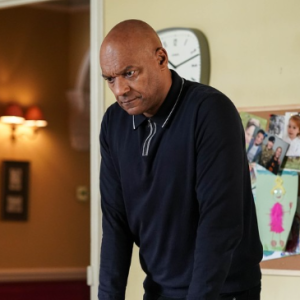
Ultimately, as the suffocating twilight establishes its final grip over the characters, the article of their lives has entered a phase of operatic suspense where the illusion of domestic stability has been permanently, legacy-shatteringly stripped away from those who utilize performative righteousness as a substitute for boundaries. George stands poised to march directly into a trap constructed from his own unaddressed longing, while Cindy retreats into a dark, solitary vacuum of her own design, leaving the family structure in a state of terminal, irreversible collapse. The viewers are left to watch through their fingers as the momentum of this confrontation moves them toward a collective, devastating collision from which no sense of identity will emerge unscathed, proving with forensic clarity that the hardest ghost to exorcise is always the one you are actively trying to save. The road ahead remains fraught with structural peril, with the inevitable fallout of George’s choice ensuring that the household will remain a site of intense, high-stakes trauma until the final breath is drawn and the long, arduous process of reckoning can finally, tentatively begin in the ruins of a loyalty that cost them absolutely everything.