
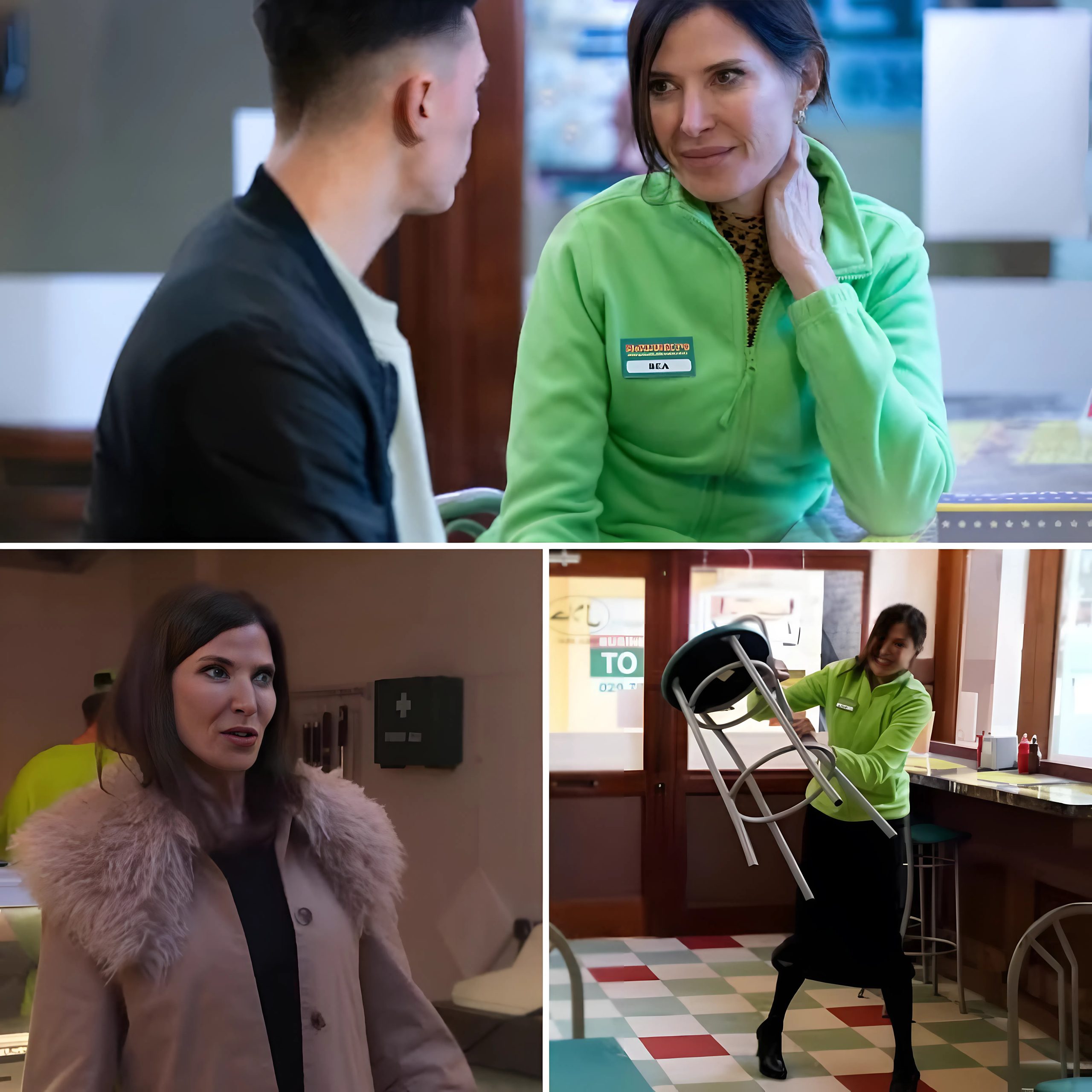
EastEnders- Bea sleeps at McKlunky’s
The neon hum of the McKlunky’s sign flickered with a rhythmic, dying stutter on the night of the fourteenth of May, casting a harsh, artificial glow over a scene of profound, isolated desperation as Bea finally reached the end of her tether and sought sanctuary within the grease-slicked walls of the Walford chicken shop. This was not merely a choice of convenience or a quirky adolescent rebellion, but a visceral, heart-wrenching admission that every other door in the Square had been slammed shut, leaving her to navigate the cold, unforgiving landscape of homelessness while the rest of the world slept in blissful ignorance behind heavy curtains. The air inside the shop, usually thick with the scent of cheap oil and the boisterous energy of the late-night crowd, had turned stagnant and heavy, echoing with the silence of a girl whose life had become a series of strategic retreats and invisible battles for survival. As she huddled in a corner booth, her frame seemingly shrinking beneath the weight of her oversized coat, the stark reality of her situation was laid bare: Bea was no longer a resident of Walford, but a ghost haunting its periphery, a child of the East End who had been failed by the very structures of family and community that were supposed to keep her safe. The sterile, white light of the fast-food joint served as a forensic lens, highlighting the exhaustion etched into her young face and the heartbreaking efficiency with which she tried to make herself small, hoping to blend into the shadows of the plastic seating before the morning light forced her back out into a world that had no place for her. This night at McKlunky’s was the definitive, catastrophic pivot point in a storyline that has long teased the fragility of Bea’s safety net, serving as a visceral exploration of the quiet, unremarkable ways in which a human being can simply slip through the cracks of a society that is too busy looking at its own reflection to notice the person drowning in the shallows.
The tragedy of Bea’s night on the linoleum floor was amplified by the agonizing irony of her location—a place of transient, cheap comfort that offered her the only warmth she could find, yet provided absolutely no security against the encroaching darkness of her circumstances. Every creak of the door and every muffled sound from the street outside sent a jolt of primal fear through her, illustrating the hyper-vigilance that has become her only constant companion in a life defined by the absence of a lock and a key. This was a masterclass in atmospheric dread, where the mundane sounds of a deep-fat fryer and a humming refrigerator were transformed into the soundtrack of a psychological nightmare, marking the minutes of a night that felt eternal. Bea’s attempt to construct a temporary home out of a tattered backpack and a hard plastic bench was a devastating display of human resilience turned inward, a desperate, pathetic effort to maintain a shred of dignity while the very concept of “home” was being incinerated by the cold reality of her displacement. The audience was forced to witness the total, systematic erasure of her childhood as she navigated the hours of darkness, realizing that for Bea, the morning would not bring the relief of a new day, but the exhausting necessity of resuming the performance of “normality” while her soul remained trapped in the fluorescent, lonely vacuum of the previous night’s survival.
As the sun began to bleed over the chimneys of Albert Square, the image of Bea waking up in the harsh, unforgiving light of the chicken shop served as a searing indictment of the community’s collective failure to see the girl standing right in front of them. This wasn’t just about a lack of a bed; it was about the profound, systemic invisibility that allowed a vulnerable teenager to sleep in a commercial space without a single person intervention, highlighting the chilling truth that in Walford, you can be surrounded by people and still be entirely, dangerously alone. The dramatic weight of the scene was carried by the silence—the absence of a mother’s voice, the lack of a protective hand, and the total vacuum of the support systems that are usually taken for granted by those who have never had to count the change in their pocket to see if they can afford an hour of warmth. This is the hallmark of the EastEnders tragedy: the way it takes a recognizable, everyday setting and turns it into a site of profound emotional violence, stripping away the comfort of the familiar to reveal the jagged, sharp edges of poverty and neglect that lurk just beneath the surface of the Square’s bustling commerce. Bea’s silent exit from the shop, shaking off the stiffness of a night spent in a booth, was a moment of quiet, devastating heroism, as she prepared to walk back into a world that continued to demand her silence even as it stripped her of her fundamental right to a safe haven.
The aftermath of this night promises a fallout that will ripple through the Square, as the secret of Bea’s “sanctuary” at McKlunky’s inevitably begins to leak into the consciousness of the residents, forcing them to confront the reality of the crisis they have spent weeks ignoring. The tension within the episode was built on the terrifying proximity of help that never arrived, as characters like Stacey or Martin walked past the very windows that shielded Bea from the wind, oblivious to the fact that one of their own was seeking shelter in a house of fried chicken. This disconnect serves as a powerful, narrative metaphor for the way society treats its most vulnerable: with a casual, peripheral awareness that never quite translates into the radical, life-saving action required to change a trajectory toward ruin. Bea’s night was a test that the community failed, and as the investigation into her whereabouts intensifies, the guilt of those who could have helped will likely become a toxic, driving force in the coming weeks, turning the mundane corner of McKlunky’s into a permanent monument to their collective oversight and the high, human cost of their distraction. 
Ultimately, as Bea blends back into the morning crowd on the market, her face a mask of practiced indifference, the audience is left with the haunting, undeniable certainty that the damage from this night is permanent, a hidden scar that will define every choice she makes as she continues her desperate, lonely walk toward an uncertain future. The brilliance of the fourteenth of May episode lay in its refusal to offer a quick fix or a dramatic rescue, choosing instead to let the reality of Bea’s situation breathe in the cold, morning air, forcing the viewers to sit with the discomfort of her plight. We are bearing witness to the slow-motion disintegration of a young life, a process that is as quiet as it is lethal, where the greatest horror is not a sudden act of violence, but the steady, unrelenting pressure of being unwanted and unhoused in a world that keeps on moving. As the neon sign of McKlunky’s finally flickers off in the daylight, the story of Bea’s night remains a visceral, lingering reminder that the most dangerous secrets in Walford are the ones that are hidden in plain sight, and that for some, the greatest battle is simply finding a place to close their eyes without the fear of never being allowed to open them again in a place they can truly call their own.