
EastEnders Shocker: Who Finally Brings Down Bea Pollard? You Won’t Guess!
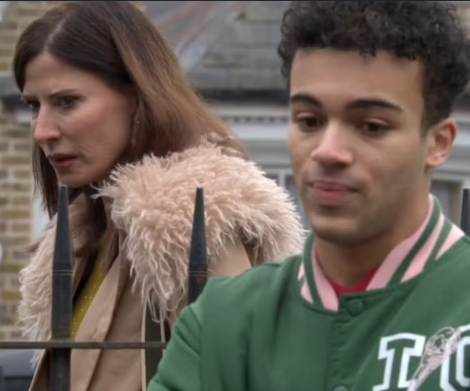
The rain-slicked, hyper-vigilant parameters of Albert Square have officially mutated into a high-octane psychological battlefield, as the upcoming broadcasting blocks of BBC’s EastEnders position the fragile domestic peace of Walford on the absolute precipice of a multi-tiered, systemic implosion. At the absolute center of this unfolding domestic apocalypse is the calculating and profoundly manipulative Bea Hyde, whose intricate, deceitful schemes are rapidly unravelling in front of a deeply compromised neighborhood matrix. Having ruthlessly colonized the sanctuary of Honey Mitchell’s home, Bea systematically rewired the transactional nature of their friendship into a vehicle for pure financial exploitation, clandestinely taking out a high-limit credit card in Honey’s name and leaving her host burdened with an astronomical, life-shattering debt. The unvarnished truth was safely contained within a pitch-black vacuum of malice until a newly elected local counselor, Ian Beale, utilized his sharp eye and authoritative sense of civic responsibility to piece together the fragmented clues of Bea’s erratic post-breakup behavior, unmasking her as the shadow entity responsible for Honey’s mounting financial ruin. This monumental betrayal has thrust an agonizing Honey into an immediate, suffocating inner conflict, tearing her baseline stability to shreds as she balances visceral maternal caution with an innate compassion, paralyzed over whether to execute a total legal destruction of her former friend or offer an unearned forgiveness to safeguard what remains of their history.
This atmospheric dread inside the household moves in terrifying synchronization with a brutal, adrenaline-fueled campaign of physical retribution spearheaded by an unyielding, hot-headed Billy Mitchell, who operates on pure, raw instinct to demand Bea’s immediate geographic eviction from the territory. However, this heavy-handed masculine dominance triggers a severe, high-stakes clash between cold reason and explosive emotion when a cautious Honey fiercely rejects his impulsive approach, resulting in a spectacular domestic fracture that forces a frustrated Billy to sleep on the sofa. The localized pressure cooker reaches a terminal velocity when Billy fails to complete necessary maintenance chores around the property, prompting a proactive Honey to scale a ladder to handle the repairs herself, completely blind to the reality that she is walking straight into a lethal, mechanical trap. Driven by a feral necessity to execute a cold-blooded act of vengeance against Billy for his hostile behavior, a cunning Bea had clandestinely tampered with the structural stability of the equipment, never calculating that her beloved, protective benefactor would be the one to plummet from the height in a sickening, bone-shattering physical infraction.
The cinematic suspense surrounding this near-fatal fall accelerates to a terminal velocity as the formatting layout of the show highlights Bea’s terrifying, sociopathic capacity for immediate tactical evasion and psychological manipulation. Moving with a calculated, clinical velocity, the predatory saboteur instantly constructs a seemingly flawless, corporate alibi, pretending to be securely locked into an active shift behind the counter at McClunkies while emergency medical services frantically rush Honey to the local hospital ward. Yet, the fragile architecture of her criminal cover-up faces a persistent, hyper-alert siege from a determined Ian Beale, whose insight and steadfastness keep him anchored to the undeniable certainty that Bea is the hidden hand behind the accident. The administrative pressure on the villainess multiplies exponentially when Linda Carter steps out of the shadows to validate Ian’s forensic suspicions, dredging up a series of dark, historic red flags from their shared school days to uncouple Bea from her performative innocence and paint her as a deeply dangerous wildcard capable of rewriting the rules of human empathy for pure personal preservation.
The multi-layered atmospheric decay takes an uncomfortable, visceral turn within the sterile clinical parameters of the hospital, where an anxious and completely unsober Billy Mitchell aggressively confronts a visiting Bea, only for the master manipulator to effortlessly feign absolute shock and tearful outrage. By weaponizing Honey’s deep-seated integrity and sensitivity, Bea masterfully coerces her victim into acting as her ultimate psychological shield, forcing a guilt-ridden Honey to demand that her own husband deliver an immediate, humiliating apology to the predator for daring to doubt her sovereign character. However, the temporary corporate victory achieved by this emotional gaslighting is completely dismantled the moment Honey is wheeled into high-stakes surgery; unable to contain his burning, protective rage any longer, an unyielding Billy shatters the artificial baseline of peace, forcefully evicting Bea from the domestic perimeter and forcing her to seek a desperate, temporary refuge amid the grease and dim lighting of McClunkies. 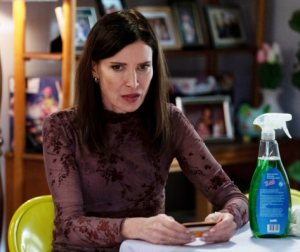
Ultimately, as the suffocating twilight of mid-May 2026 establishes its permanent, unyielding grip over the wet cobblestones of Walford, the global EastEnders viewing community remains suspended over an absolute abyss of breathless suspense, watching through their fingers as the countdown toward a final reckoning ticks away. The interlocking crises of identity theft, malicious corporate fraud, and calculated domestic execution ensure that the long-term fallout of Bea Hyde’s reign of terror will ripple across the BBC schedule for months to come, demanding an impossible, life-altering price from those who treated her as a sister. The audience is left to pace their living room floors and analyze every frame for hidden clues, fully aware that a relentless Ian Beale is poised to deploy the full, uncompromised authority of his council office to launch a definitive, street-level exposure that will completely liquidate her sanctuary. The stage is set for a July reckoning of cataclysmic proportions, a visceral, sobering reminder that when a community’s most independent survivors allow a wolf to sleep under their roof, the true cost of surviving the dark secrets of the square will always leave their lives permanently and irreversibly altered in its wake.