
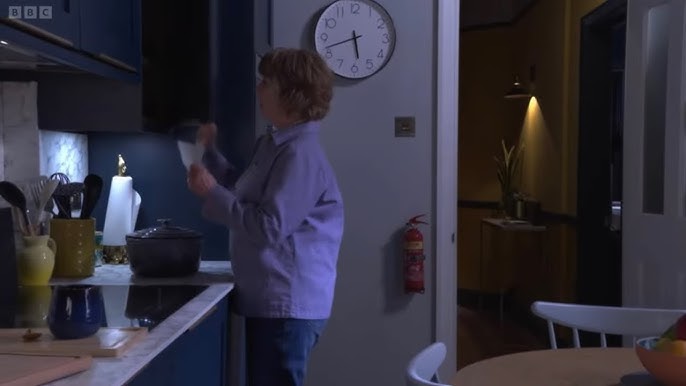
Eastenders Julie explains to Phil on why she hasn’t open the letter from Nigel yet scene
The rain-slicked, shadow-drenched cobblestones of Albert Square have officially transformed into a high-octane theater of absolute psychological devastation and underworld friction this week, as the latest broadcasting blocks of BBC One and BBC iPlayer unleash a spectacular narrative demolition that leaves multiple iconic dynasties standing in the smoldering ruins of their own domestic and financial peace. Sending an intense, screaming shockwave through millions of dedicated households across the United Kingdom tuning in during mid-May 2026, the pristine veneer of corporate and suburban stability around the car lot has been cleanly shattered by an explosion of gangland extraction, severe baseline paranoia, and shifting battle lines over survival. Standing at the absolute center of this unfolding Tuesday afternoon apocalypse is a hyperventilating, sleep-deprived Mark Fowler Jr. and a fiercely independent Lauren Branning Beale, whose fragile commercial reality initialized its spectacular collapse when a catastrophic act of vehicular arson reduced their asset-rich classic inventory to absolute smoke and ash. This low-frequency pressure cooker across the territory redlines to an absolute maximum velocity under the flickering streetlights as the desperate business partners are forced into a claustrophobic corner of total economic castration, trying to coordinate a dangerous, law-breaking venture to source black-market replacement vehicles to satisfy a closing crime syndicate while the surrounding neighborhood predators watch their every move from the shadows.
This profound atmospheric decay moves in terrifying synchronization with a brutal campaign of raw executive friction and deep-seated moral clashes inside the local automotive clearing, where a sudden, high-velocity confrontation unmasks the fracturing boundaries of their illicit partnership. Pacing the floorboards on pure adrenaline following a narrow near-miss with the police, a sweating Mark aggressively confronts a visibly conflicted Lauren, ruthlessly mocking her sudden moral awakening by sardonically declaring that his new work wife has officially developed a guilty conscience. Lauren violently matches his defensive posturing with an uncompromised authority of her own, fiercely dictating that she will not tolerate his derogatory labels while reminding him of the ultimate gold-standard rule of street survival: you never compromise your own doorstep, especially when the target of their illicit vehicle smuggling operation is practically a member of the local family network. Wielding an unmistakable weight of raw, street-level tension, a completely cornered Mark cold-bloodedly castrates her traditional ethical firewalls, firing back that if a transaction generates enough liquid cash to stave off a brutal underworld execution, he would willingly compromise any boundary on command, stubbornly formatting a dangerous new baseline where their remaining masks of innocence are being systematically torn away on the cobblestones.
The layout of this television warfare takes an extraordinarily complex, visceral turn across the geographical parameters of the territory, shifting seamlessly from the high-stakes criminal matrix of the car lot toward the heavy, low-frequency grief consuming the Mitchell bloodline on the absolute eve of Nigel Bates’s highly publicized, emotional funeral. The structural suspense inside the tight kitchen parameters reaches an operatic peak during a heart-shattering, shadow-drenched clearing sequence between a completely broken Billy Mitchell and an iron-clad Phil Mitchell, where the devastating weight of administrative and personal trauma threatens a total cognitive buffering. Clutching a box of sentimental party rings and French fancies that Nigel loved, a weeping Billy finds himself entirely uncoupled from his usual resilience, paralyzed by a severe campaign of internal performance anxiety as he prepares to deliver the milestone service tribute. Staring down the final, written remnants of Nigel’s last words, an anxious Billy begins to hyperventilate in a chaotic feedback loop of profound frustration, wildly sobbing into a pitch-black vacuum of absolute helplessness that no localized eulogy can genuinely do justice to the complex legacy of the fallen icon, terrified that a single administrative blunder or a failure to achieve absolute structural perfection when he stands before the vicar will permanently violate the memory of the deceased.
Compounding this panoramic atmosphere of domestic attrition and calculated tough love is the masterful execution of Phil Mitchell’s patriarchal intervention, where the legendary enforcer steps straight into the line of fire to forcefully construct an iron-clad emotional defensive firewall for his spiraling relative. Drawing upon the profound, unredacted history of his own personal wreckage—explicitly invoking the agonizing trauma of unsealing a final, heartbreaking correspondence sent by his late mother, Peggy Mitchell—a grim-faced Phil passionately breaks through Billy’s suffocating vacuum of absolute defeat with an unadulterated masculine authority. Refusing to let the fractured household collapse under the immense pressure of the impending broadcasting milestone, Phil forcefully commands Billy to stop stressing, delivering a gold-standard masterclass in grief psychology by dictating that a legacy’s end is never a permanent structural termination. In a deeply resonant, gravelly monologue that vibrates with deep-seated truth, Phil assures the shattered veteran that Nigel will continue to exist inside their dreams, his phantom voice echoing through the territory’s infrastructure to remind them that true love outlives any physical baseline, fiercely promising that whatever words are spoken at the altar will never function as their final transaction with the dead because Nigel would never tolerate his family self-destructing on the eve of his final farewell.
Ultimately, as the suffocating twilight of mid-May 2026 establishes its permanent, unyielding grip over the BBC daytime network schedules, the global viewing community remains suspended over an absolute abyss of breathless suspense, watching through their fingers as the countdown toward an absolute structural disaster rapidly ticks away. The breathtaking pacing of this real-time breakdown excels by demonstrating with a gold-standard authority that when the currency of trust, pride, and hidden liabilities completely bankrupts the community’s elite, the true cost of surviving the night demands an impossible, life-altering transaction from every independent survivor involved in the storm. Viewers are left to pace their living room floors on pure adrenaline and intense curiosity, forensically analyzing every missing piece of the puzzle to discover whether Mark Fowler Jr. will survive his impending, late-night rendezvous with the ruthless crime boss Russell’s closing enforcers, if Lauren’s desperate bid for independent commercial extraction will trigger a catastrophic terminal event of absolute self-destruction, or if Billy Mitchell’s highly anticipated funeral performance will explode into a multi-front Mitchell civil war, ensuring that the impending chemical explosion of truth and betrayal on the cobblestones will leave the structural layout of Albert Square permanently and irreversibly altered in its wake.