
Sam Hands Over Explosive Evidence Against Megan | Coronation Street
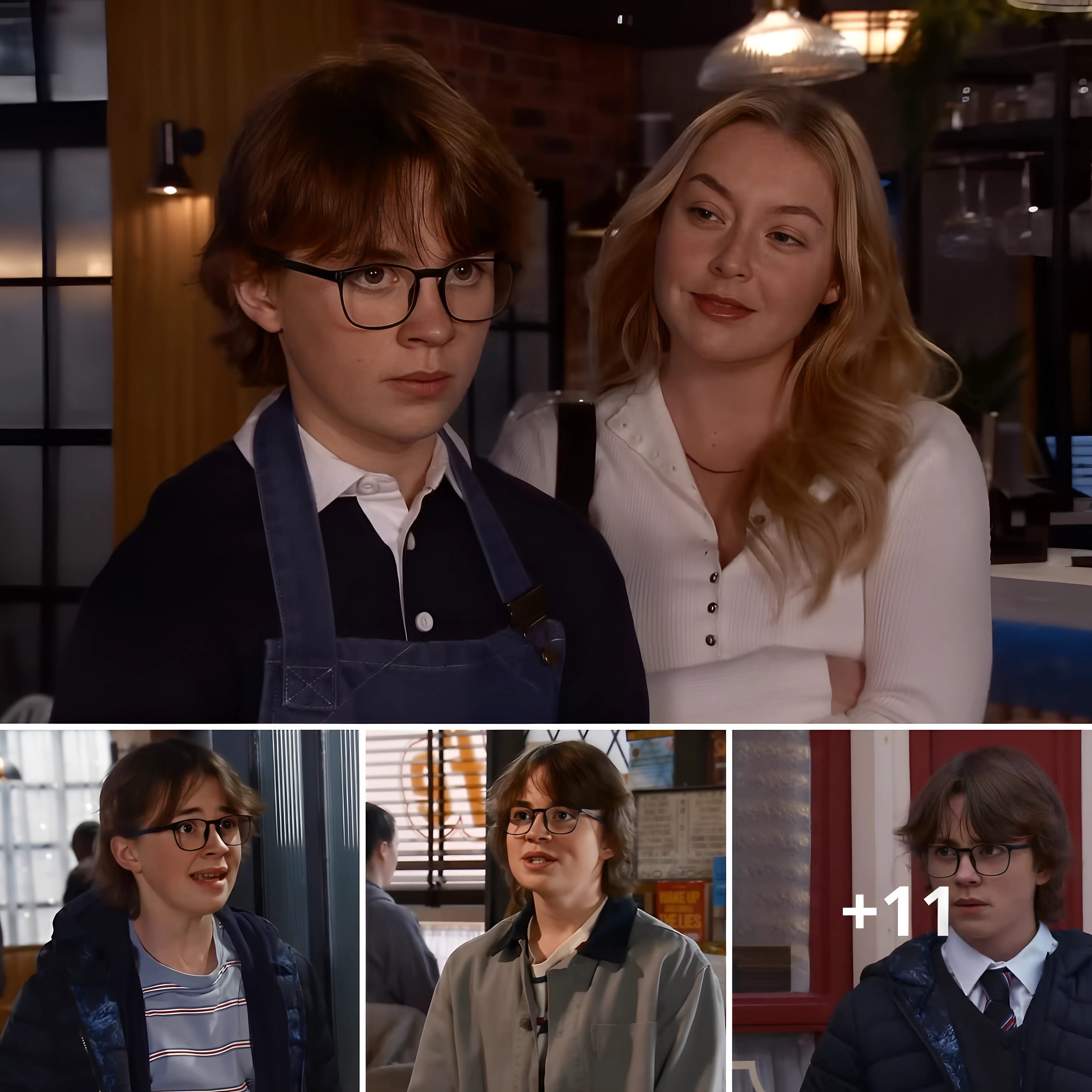
The cobblestones of Weatherfield have become a landscape of profound psychological erosion, as the lingering, toxic trauma of Megan Walsh’s manipulation continues to manifest in increasingly harrowing ways, most visibly in the heartbreaking decline of young Sam Blakeman. Sam, once a bright and steady presence, is now adrift in a fragmented reality where the line between the physical world and the manifestations of his own shattered psyche has dissolved, leading to terrifying visual hallucinations that leave him isolated and desperate. His recent encounter in the ginnel, where a panic-stricken Sam lashed out at an empty space while convinced he was fighting his tormentor Will, serves as a gut-wrenching testament to the depth of his trauma, illustrating that for the victims of manipulation, the threat does not vanish simply because the perpetrator has been unmasked. This mental health crisis, which showrunner Kate Brooks has confirmed will be a central pillar of the narrative through the summer months, is a devastating exploration of how the betrayal of trust can fundamentally rewire a child’s perception of safety, turning his own environment into a source of constant, looming menace. As Sam’s family struggles to navigate the complexity of his condition, their growing realization that he requires urgent professional intervention highlights the tragic reality that the damage inflicted by Megan Walsh extends far beyond the immediate, physical harm she caused, poisoning the very foundations of the boy’s ability to trust his own senses.
While Sam battles the ghosts of his past, the shadow cast by the brutal murder of Theo Silverton continues to deepen, with the investigation spiraling toward a explosive confrontation that threatens to ensnare Summer Spellman in a web of circumstantial evidence she may be unable to escape. The discovery of Summer’s private diary—a raw, unfiltered confession of rage that includes a chilling entry about holding a gun to Theo’s head—has transformed her from a grieving survivor into the primary suspect, a shift that is being accelerated by the relentless, methodical pressure of Kit Green and Lisa Swain’s investigation. The tension is compounded by the erratic, self-protective behavior of George Shuttleworth, whose decision to provide information to the police has created a rift in his loyalty to Todd Grimshaw, setting the stage for a betrayal that could have catastrophic consequences for everyone involved. The narrative is tightening around Summer, with every new clue serving to validate the detectives’ suspicions, while the audience is left to watch in agony as a young woman already burdened by loss is potentially crushed by the weight of a narrative that is increasingly painting her as the killer, regardless of the deeper, darker truths that remain hidden behind the scenes.
The dysfunction of the Driscoll family remains a corrosive presence on the street, as Maggie and Ben continue to navigate the wreckage of their lives in the aftermath of Megan Walsh’s deception, with the impending release of the teacher on bail acting as a fresh spark for their internal collapse. Ben’s fury, ignited by the news of Megan’s freedom and exacerbated by the exposure of Maggie’s long-held secrets during a disastrous family lunch, highlights the deep, irreparable fissures that have formed within the household, leaving Will Driscoll to grapple with his own mental health decline in a home that feels less like a sanctuary and more like a battlefield. The inclusion of Maggie’s desperate, tear-filled plea for compassion in the arms of Eva Price provides a rare, fleeting moment of vulnerability, yet it does little to stem the tide of anger that is driving Ben toward an inevitable, violent confrontation with the realities of his family’s failure. As the secret of Maggie’s past unravels, the Driscoll family represents a cautionary tale of how the weight of unresolved trauma and the failure of protective instincts can lead to a state of total, systemic breakdown, leaving the characters isolated and unable to mend the damage before it consumes them entirely.
Meanwhile, the psychological warfare extending across Weatherfield is taking a toll on those who have spent their lives attempting to be the moral bedrock of the community, as Daniel Osbourne finds himself the target of a vicious online trolling campaign that threatens to destroy his reputation and his fragile sense of self. The cruelty of the accusations—specifically the vile, unfounded claims that he was aware of Megan’s crimes and was himself an abuser of Summer—is a calculated, modern form of persecution that has left Daniel incapable of facing the outside world, creating a state of retreat that is both understandable and deeply concerning for his future. The failed attempts at comfort provided by Jodie Ramsay, whose own dishonesty has only served to deepen Daniel’s paranoia and exacerbate his isolation, highlight the way that in a community defined by suspicion and trauma, even the most well-intentioned gestures can become sources of further psychological harm. The parallels between Daniel’s public vilification and Sam’s internal fragmentation underscore a broader theme of the season: the terrifying speed at which a person’s reality can be dismantled by the collective judgment and malice of others, leaving them to navigate a world that has turned against them based on distorted, false narratives.
Ultimately, as Coronation Street marches toward what promises to be a series of climactic confrontations, the village is defined by an atmosphere of collective, suffocating anxiety, where the boundaries of truth and fiction are becoming increasingly blurred. From the refurbishing of Roy’s Rolls—a symbol of continuity that stands in stark, hopeful contrast to the surrounding decay—to the drinking-induced descent of Sarah Platt as she struggles to process her own assault, every character is caught in a cycle of reckoning that demands an impossible level of resilience. The viewers are left to grapple with the realization that the peace of Weatherfield is a fragile, conditional state, and that the only way to navigate the coming storm is to drag every buried secret, every shameful confession, and every unaddressed trauma into the harsh, demanding light of day. As the investigation into Theo’s murder inches toward its conclusion and as the fragile survivors of Megan Walsh’s manipulation continue to fight for their own sanity, the series is delivering a masterclass in long-form storytelling that refuses to offer easy absolution, forcing its characters—and its audience—to confront the fact that in a world where trust has been shattered, the work of rebuilding is the most dangerous, and most necessary, journey of all. The road ahead remains fraught with peril, with the inevitable fallout of the diary’s contents and the return of Megan Walsh to the community ensuring that the village will remain a site of intense, high-stakes drama until the final truth is revealed and the long, arduous process of healing can finally, tentatively begin.