
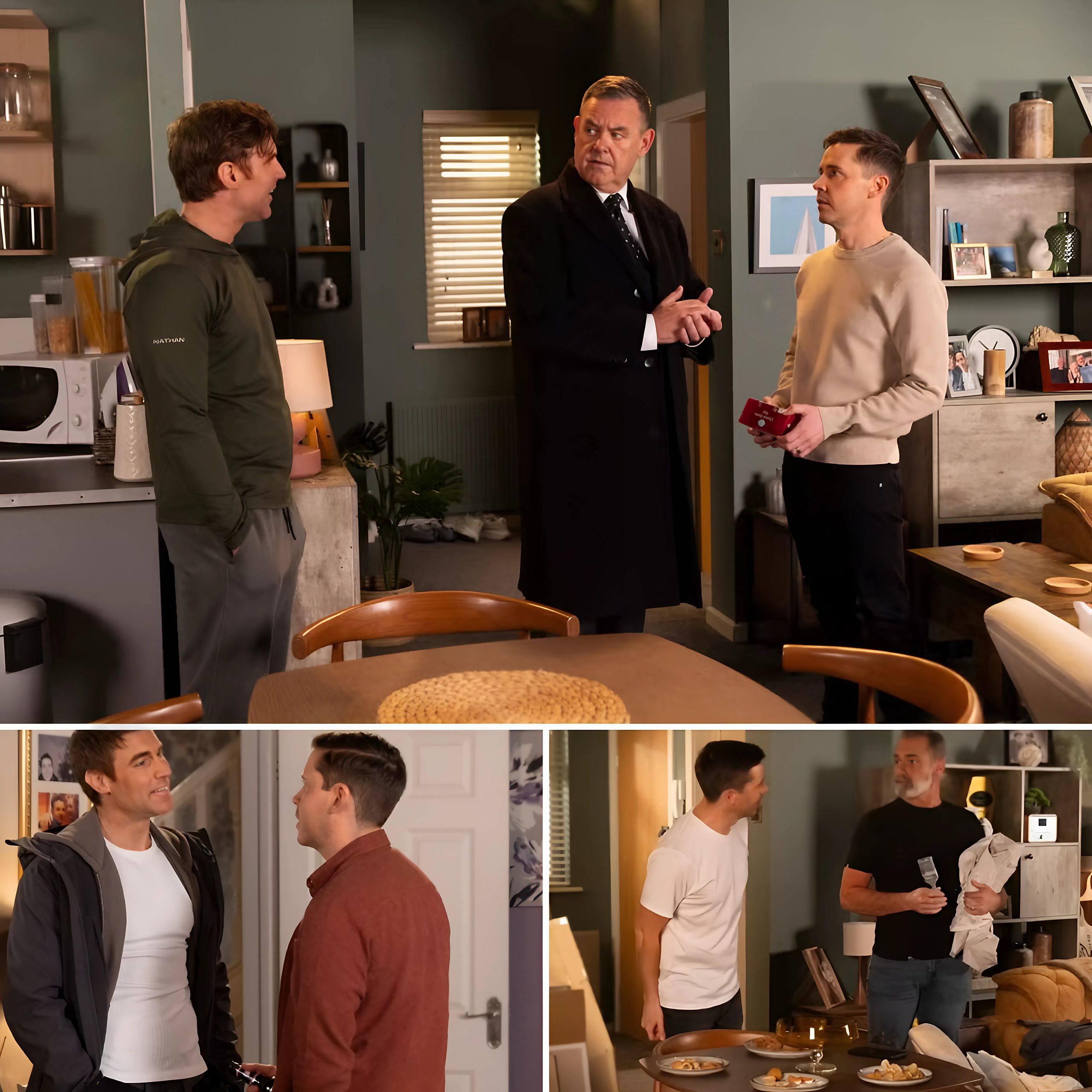
Theo’s Killer FINALLY Revealed?! Gary Windass Takes Summer Hostage
The cobblestones of Weatherfield are currently slick with a toxic mixture of paranoia, long-buried secrets, and the metallic tang of impending justice as the murder of Theo Silverton transforms into a localized apocalypse of the soul for the residents of the North West. In a sequence of events that has fundamentally altered the brain chemistry of every loyal viewer, the investigation into Theo’s death has mutated from a standard police inquiry into a high-stakes psychological thriller where the suspects are circling one another with the predatory intensity of wolves. Gary Windass, a man whose history of factory roof collapses and loan shark slayings has made him the street’s permanent scapegoat, finds himself at the epicenter of this storm, with Detective Kit Green methodically dismantling his builder’s yard in a desperate search for the blunt object that silenced Theo forever. The dramatic irony is suffocating; Gary attempts to maintain a “Zero-Footprint” facade of calm, but his decision to delete CCTV footage of himself vandalizing Theo’s van has served as a digital execution of his own credibility, providing the authorities with the exact kind of “guilty behavior” that guarantees he will remain the prime suspect, regardless of whether he actually pulled the trigger or merely played the part of a convenient villain in a tragedy he didn’t orchestrate.
The psychological landscape of this “Who Done It” reached a thunderous peak when a random selfie, captured by the unsuspecting Sally Metcalfe at the bistro, surfaced as a narrative grenade capable of incinerating Gary’s fragile defense. The photograph, intended to be a mundane record of a dinner date, contains the chilling, shadowy silhouette of a man who looks exactly like Gary walking away from the flat where Theo was found, effectively proving that even the most meticulous cover-ups are vulnerable to the chaos of modern life. This photographic evidence has plunged Gary’s marriage into a state of absolute, breathless arrest, as Maria Windass—who already risked her own freedom by providing him with a false alibi—now faces the terrifying possibility that she has been protecting a murderer, or worse, that Gary has been leading a double life that includes a clandestine and potentially incriminating relationship with his ex-girlfriend, Sarah Platt. The suspicion that Gary’s true alibi involves an affair with Sarah has created a high-stakes, soap opera nightmare: the choice between rotting in a cell for a murder he might not have committed or destroying his family by admitting to a betrayal that would leave his marriage in total, unapologetic ruins.
While Gary serves as the primary target for the police, the true “mustache energy” of the mystery is radiating from Summer Spellman, the golden girl whose journey from victimhood to potential vigilante has left the audience in a state of absolute, total panic. When George Shuttleworth unearthed Summer’s private journal, he found a visceral, blood-chilling entry detailing exactly how she fantasized about putting a gun to Theo’s head, a discovery that reframes her entire narrative as a survivor who may have finally decided to stop shrinking from her trauma and start inflicting it. Her actress, Harriet Bibby, has hinted that Summer deserves to be a suspect, and her frantic, “panic mode” attempts to move her university placement up so she can flee to America before the handcuffs can find her are effectively a digital execution of her own reputation. Every shift of her eyes when a police officer walks by and every tear shed in the gardens speaks to a conscience that is not trying to hide a crime, but is instead desperately trying to outrun the terrifying realization that she might be exactly the kind of person who could hold a gun to someone’s head if pushed past the point of no return.
Underpinning this localized apocalypse of the soul is the growing suspicion that the official list of suspects is merely a grand distraction, as fans turn their eyes toward Theo’s estranged family—his ex-wife Danielle and her son, Miles—whose arrival in the village conveniently aligns with the exact window of the murder. Theo was a man who thrived on abuse, and the history of his treatment toward those closest to him suggests that the real perpetrator could be a character we barely know, someone who saw the monster in their own home and decided that the only way to ensure their future was to bury the past in a flat on the cobbles. Meanwhile, George Shuttleworth, a man who makes his living dealing with death, is clearly haunted by what he saw on that fateful night, his internal battle between protecting Summer and upholding his conscience serving as the final, high-octane gear in a machine that is threatening to dismantle the entire social hierarchy of Weatherfield. The police, trapped in a bitter, tactical standoff between the aggressive Kit Green and the more methodical Lisa Swain, are essentially racing against a clock that is being turned backward by the very residents they are trying to bring to justice.
Ultimately, the overarching message for the drama-obsessed icons of Weatherfield is that the nightmare of Theo Silverton’s death is far from over, and the fallout of this discovery is going to be absolute. Whether Gary Windass is finally paying for a lifetime of skeletons in his closet or if Summer Spellman’s rage has pushed her into a territory of darkness from which there is no return, the truth has a funny way of clawing its way back to the surface at the absolute worst possible moment for everyone involved. We are witnessing a mastery of soap suspense where the real predator is the history you can’t outrun, and the only way to survive is to abandon the silence that keeps these monsters in power. As the credits roll and the drums beat, the viewers are left deceased with anticipation, perfectly captured by the chilling realization that in the world of daytime drama, some secrets are more lethal than the blunt objects used to end a life. Stay chaotic and trust no one, because in 2026, the most dangerous thing you can own on the cobbles is the knowledge that the person standing next to you might have been the one holding the lighter, the gun, or the final, lethal blow to the secret that was supposed to stay buried forever.